Why high-speed finishing is still a live topic in 2026
Trade shows still treat finishing as a production decision, not a showroom trick. EMO Hannover continues to frame high-end production technology around precision and high-speed milling, while IMTS keeps an Abrasive Machining / Sawing / Finishing sector in the show map. That matters because the question has not changed: can a faster finishing process hold quality, repeatability, and cost control once it leaves the booth?

For background on current event positioning, see the EMO Hannover visitor overview and the IMTS sector descriptions. If you want the site-level event pages, the trade fair overview and home page are the obvious starting points.
What to measure before you trust a demo
Before the machine starts cutting, write down the baseline. The useful metrics are simple enough:
- Cycle time – seconds or minutes per part, including any tool changes that belong to the operation.
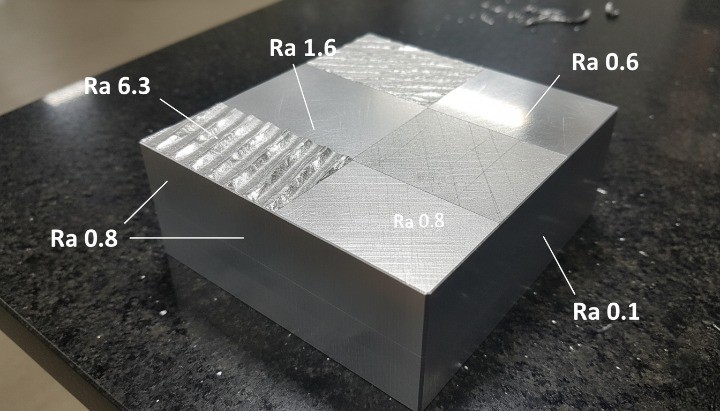
- Surface finish – Ra and, where relevant, Rz. Use the same measurement method before and after.
- Scrap and rework – count actual rejects, not optimistic assumptions.
- Tool wear – life per edge, and the reason the tool is retired.
- Spindle utilization – productive cutting time versus setup, probing, and waiting.
- Setup time – fixture, offset, program, and first-piece approval time.
A demo that cuts 30 percent faster but needs twice the setup discipline may still lose on total cost per part. That is not a paradox. It is arithmetic doing its job.
The ROI math: where gains usually come from and where they do not
Start with a clean before-and-after model. A practical worksheet should compare:
- machine time per part,
- operator time per lot,
- tooling cost per part,
- scrap and rework cost,
- inspection time, and
- changeover or fixture cost.
In many cases, the main gain comes from reducing non-cut time or finishing in fewer passes. Sometimes the gain comes from longer tool life. Sometimes it is mostly a better surface on a difficult part. The bad version of ROI math assumes every speed increase becomes a margin increase. It does not. If the process only fits one part family, the business case is narrower than the booth lighting suggests.
For a formal baseline on surface texture terms, the NIST surface roughness guide is a useful reference. For a broader manufacturing context on roughness parameters, ISO 4287 defines the common roughness terms.
A simple scorecard for comparing machines, tools, and process parameters
Keep the comparison boring on purpose. The scorecard below is enough for an honest first pass.
| Category | Question | Pass/fail note |
|---|---|---|
| Quality | Does the demo hit target Ra/Rz on the real material? | |
| Cycle time | Is the full cycle faster after setup and inspection are counted? | |
| Tool life | Is tool wear stable enough for the planned lot size? | |
| Repeatability | Do repeated parts stay within the same finish band? | |
| Process fit | Does the setup suit your part family, not just a showpiece geometry? |
That table is not fancy. Good. Fancy is how you end up with a spreadsheet that cannot survive contact with the machine.
If you need a site-specific reference point for follow-up material, see the downloads and resources page and the additional downloads page.
Questions to ask vendors
Ask for the details that usually hide behind the banner stands:
- What repeatability data do you have across several runs?
- What coolant strategy did you use, and why?
- How sensitive is the toolpath to fixture variation or thermal drift?
- What part-family limits did you assume in the demo?
- What measurement method confirmed the surface finish claim?
Repeatability matters more than the single best part. A one-off hero cut is useful as a clue, not as a purchasing department. Ask for the boring part of the story.
For trade-show context on the floor itself, the site pages for IMTS and CIMES are relevant, and the broader event calendar on Messen & Events keeps the focus on actual production events rather than brochure weather.
When high-speed finishing makes sense for small batches vs. production runs
For small batches, high-speed finishing can work when setup time is low, the part family is stable, and the process gives a clear quality improvement on parts that would otherwise need manual touch-up. In that case, the value may be fewer operator interventions and better consistency from the first article onward.
For production runs, the process has to survive repetition. Tool life, chip evacuation, coolant delivery, and machine availability become first-order variables. A faster cut that forces more frequent intervention is not faster. It is just louder.
Use a simple rule: if the process improvement cannot be repeated across the planned lot size, it is a pilot, not a production answer.
Checklist before approving a pilot trial
- Confirm the target material, geometry, and finish requirement.
- Document the current baseline for cycle time, Ra/Rz, scrap, and tool life.
- Define the exact measurement method and acceptance limits.
- Ask the vendor for repeatability data and parameter sheets.
- Test the setup on the smallest realistic lot, not an idealized demo part.
- Record operator time, setup time, and any extra inspection steps.
- Compare total cost per part, not just spindle minutes.
If the pilot passes, you have a case for production engineering. If it fails, you still learned something cheaper than a bad purchase order.
Bottom line
High-speed finishing ROI is not a vibe. It is a measured comparison between baseline and proposed process. The winning process is the one that improves quality, cycle time, and repeatability without smuggling extra cost into setup, inspection, or maintenance. Trade show demos are useful precisely because they show the architecture of the process. Your job is to test whether that architecture survives the shop floor.
For readers who want to keep exploring, the About page explains who is behind the site, and the Contact page is the place to request follow-up information.